
How Long an IV Vitamin C Infusion Takes and Why
Quick Summary
A typical iv vitamin c infusion runs about 30 minutes to 2 hours, depending on the dose, concentration, and the provider’s infusion rate. Total appointment time is longer, because check-in, IV placement, and monitoring add time before and after the drip.
- Infusion time is the minutes you are connected to the drip, usually 30 minutes to 2 hours.
- Total appointment time typically adds 15 to 45 minutes for intake, line placement, and observation.
- Larger doses and more dilution generally take longer to run safely.
- Infusion speed is a safety decision, so a shorter session is not automatically better.
- Ask your provider about kidney function and G6PD deficiency screening before high-dose therapy.
Table of Contents
- How Long an IV Vitamin C Infusion Typically Takes
- What Affects the Length of Your Infusion: Dose, Concentration, and Protocol
- Infusion Time Versus Total Appointment Time
- What to Expect During IV Vitamin C Therapy, Step by Step
- High-Dose IV Vitamin C Side Effects and Safety Screening
- How Often Should You Get a Vitamin C IV?
- Booking a Consultation Before Your First High-Dose Infusion
- Frequently Asked Questions
How Long an IV Vitamin C Infusion Typically Takes
A typical IV vitamin C infusion runs about 30 minutes to 2 hours, according to a clinical review of intravenous vitamin C in cancer supportive care (Intravenous vitamin C in the supportive care of cancer patients). That range is a proposed estimate, not a fixed rule. The actual time depends on the dose, the concentration, and how the provider runs the drip.
To plan realistically, separate three different clocks that people often blur together:
- Infusion time, the minutes you are actually connected to the drip.
- Total appointment time, check-in, screening, IV placement, the infusion, and brief observation afterward. This is usually 15 to 45 minutes longer than the drip itself.
- Duration of effects, how long vitamin C stays elevated in your bloodstream and how long any perceived benefit lasts. These are separate questions covered below.
Infusion time by dose (qualified examples)
Exact timing is set by your provider’s protocol, but a common pattern is that larger doses take longer because they are diluted into a larger volume and run at a controlled rate. As a general guide, not a prescription, many clinics run:
- Lower-dose wellness infusions (roughly 1-10 grams): often 30 to 60 minutes.
- Moderate doses (roughly 15-25 grams): commonly 60 to 90 minutes.
- High doses (25 grams and up, including cancer-supportive protocols): frequently 90 minutes to 2 hours or more, depending on dilution and rate.
These are illustrative ranges drawn from common clinical practice, not universal standards.
Why rate and volume matter more than the number on the bag
Vitamin C is delivered intravenously as a diluted solution, typically sodium ascorbate or ascorbic acid mixed into a larger volume of sterile fluid. Two levers control how long that takes:
- Dilution volume. A 25-gram dose mixed into a larger bag runs longer than the same dose in a smaller bag.
- Infusion rate. Providers cap the drip rate to reduce the risk of side effects such as lightheadedness, vein irritation, or fluid shifts. A faster drip shortens the session but is a safety decision, not a convenience one.
Do not assume a shorter infusion is a better deal. Speed is a safety decision, not a convenience. Ask your provider why your specific dose and rate were chosen.
The bottom line for scheduling
If you are booking your first session, ask two questions: How long will I be connected to the IV? and How long should I block out for the whole visit? The first answer is usually 30 minutes to 2 hours; the second is typically that plus 15 to 45 minutes for intake, line placement, and observation.
What Affects the Length of Your Infusion: Dose, Concentration, and Protocol
Three factors shape how long your infusion lasts:
- Dose: Larger doses of vitamin C generally take longer to deliver safely.
- Concentration: A more diluted solution usually runs over a longer period.
- Protocol: Each clinic sets its own infusion rate and session plan.
Rate matters most. A faster drip shortens the session but can raise the risk of side effects. Your provider sets the pace based on your dose and your health history.
Watch out: Do not assume a shorter infusion is a better deal. Speed is a safety decision, not a convenience.
Infusion Time Versus Total Appointment Time
The infusion itself is only part of your visit. Total appointment time generally includes:
- Intake paperwork and a review of your health history
- Preparation of the solution
- Placing the IV line
- The infusion itself
- Monitoring and removing the line afterward
A visit can take noticeably longer than the drip. When you book, ask for total appointment time, not just the infusion length.
What to Expect During IV Vitamin C Therapy, Step by Step
Here is the typical flow of a session:
- Check-in and screening. Staff review your history and medications.
- IV placement. A small needle goes into a vein, usually in the arm.
- Infusion. The solution runs slowly through the line while you rest.
- Monitoring. Staff check on you during the drip.
- Removal and recovery. The line comes out and you rest briefly before leaving. (Source: The National Institutes of Health (NIH) Office of Dietary Supplements)
Bring something comfortable to do and plan to rest afterward.
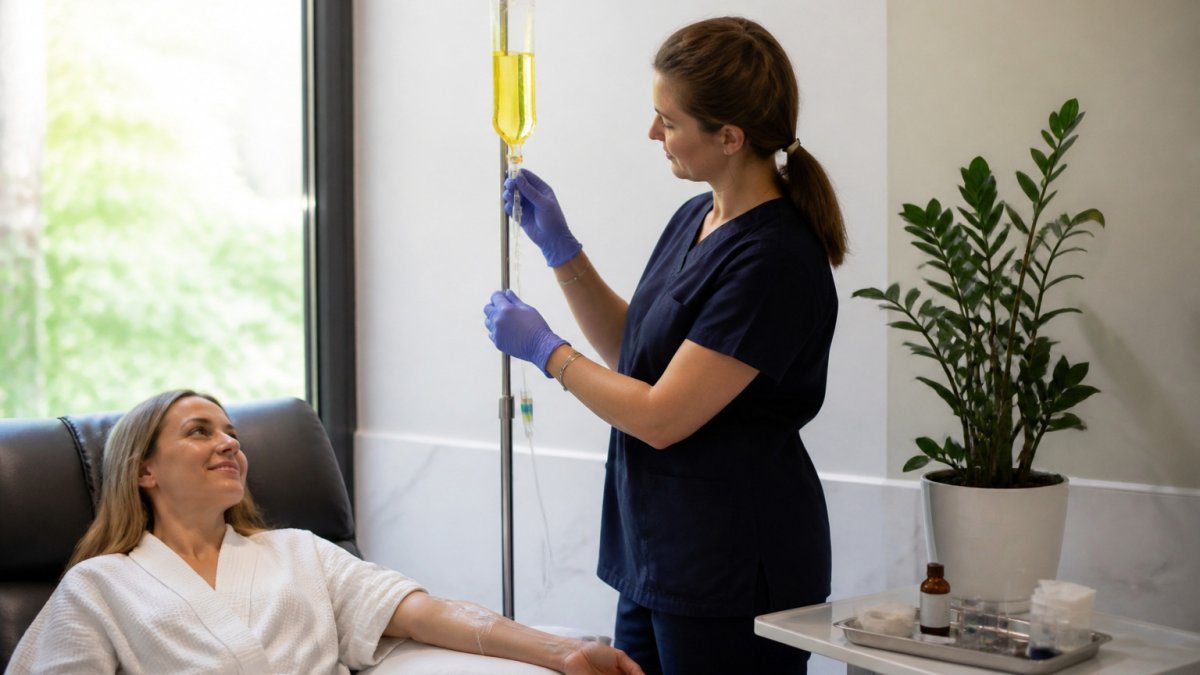
The typical session moves through five stages, from check-in to leaving the clinic.
| Step | What happens | Time or note |
|---|---|---|
| Check-in and screening | Staff review your history and medications | Part of total visit time |
| IV placement | Small needle placed in a vein, usually the arm | Part of total visit time |
| Infusion | Solution runs slowly while you rest | About 30 minutes to 2 hours |
| Monitoring | Staff check on you during the drip | During the infusion |
| Removal and recovery | Line removed, brief rest before leaving | Part of total visit time |
High-Dose IV Vitamin C Side Effects and Safety Screening
High-dose IV vitamin C carries risks, and the safety conversation should happen before the needle goes in, not after. Read a detailed guide to high-dose IV vitamin C side effects before you decide.
Common side effects and how long they last
Side effects reported with IV vitamin C vary by person and dose. Commonly described effects include:
- Vein irritation or a cool/burning sensation at the IV site, usually during the infusion, easing within minutes of slowing the rate.
- Lightheadedness or a transient drop in blood pressure, typically resolves within minutes to an hour after the drip is slowed or stopped.
- Nausea or stomach cramping, can occur during or shortly after high doses; usually settles within a few hours.
- Increased urination, vitamin C is water-soluble and excreted by the kidneys, so expect to urinate more for several hours afterward.
- Fatigue or a brief energy dip, some people feel tired for a few hours post-infusion; others feel energized.
More serious but uncommon risks are why screening matters. These include kidney stone formation (from oxalate), fluid and electrolyte shifts, and, in people with a specific inherited enzyme deficiency, red blood cell breakdown.
The screening that should happen first
Providers typically review several things before high-dose therapy:
- Kidney function. Vitamin C is cleared by the kidneys, and high doses can raise oxalate levels. People with reduced kidney function or a history of oxalate kidney stones may be advised against high-dose IV vitamin C or monitored more closely.
- G6PD deficiency. This inherited enzyme deficiency can cause red blood cells to break down (hemolysis) under high-dose vitamin C. Ask whether your provider screens for it before starting high-dose protocols.
- Medications and conditions. Blood thinners, diabetes monitoring (high-dose vitamin C can affect some glucose readings), and iron-overload conditions (hemochromatosis) all warrant a conversation.
- Pregnancy and breastfeeding. Discuss with your provider before any high-dose therapy.
Ask your provider directly: Do you screen for G6PD deficiency and check kidney function before high-dose vitamin C? A clinic that answers clearly and specifically is a good sign.
If you are in cancer treatment
High-dose IV vitamin C is sometimes given alongside cancer care, but it can interact with chemotherapy and radiation. Check with your oncology team before starting, and tell them the dose and schedule you are considering. MD Anderson guidance on supplements during cancer treatment
After the infusion
Ask your provider what hydration guidance applies to you after an infusion. Avoid adding high-dose oral vitamin C supplements on top of an infusion unless your provider approves.
How Often Should You Get a Vitamin C IV?
Frequency should be set with your provider based on your goals and health status. Schedules vary, so ask how many sessions are planned and how progress will be checked.
Booking a Consultation Before Your First High-Dose Infusion
Before your first session, a consultation helps your provider review your history and decide whether high-dose vitamin C fits your needs. Compare clinics in the Mountain View Natural Medicine clinic comparison guide before booking.
At Pacific Naturopathic, we offer integrative consultations for patients seeking IV therapy alongside their existing care. Call (650) 961-1660 to ask about scheduling.
Frequently Asked Questions
How long does an IV vitamin C infusion take?
A vitamin C infusion commonly runs about 30 minutes to 2 hours. A clinical review of IV vitamin C in cancer supportive care proposes an infusion window of 30 minutes to 2 hours, and the authors describe 1- to 2-hour infusions given once or twice weekly in their clinical experience. That is not a universal protocol. The exact duration depends on the dose, the volume of the solution, and the provider’s protocol, so ask your provider for the expected run time before your appointment.
Does the dose of vitamin C affect infusion time?
Yes, dose and concentration can change how long an infusion runs. Higher doses are often given in larger volumes or at controlled rates, which can extend the session. Lower doses may run more quickly. The provider sets the rate to match the protocol and your comfort, so the specific timing for your plan should come from your clinician rather than a general estimate.
What side effects should you watch for during or after an IV vitamin C infusion?
Some people notice temporary effects such as discomfort at the IV site, flushing, or lightheadedness. Because high-dose vitamin C can interact with certain conditions, including kidney function problems and G6PD deficiency, medical screening before treatment matters. Tell your provider about any new symptoms during or after the infusion so they can assess them promptly.
How often should you get a vitamin C IV?
Schedules vary by individual. How often you should come in depends on your health history, treatment goals, and how you respond, and should be decided with a qualified provider during a consultation.
