
7 Natural Approaches to Childhood Allergies
Quick Summary
Naturopathic approaches to childhood allergies look at the whole child, reviewing sleep, diet, stress, environment and family history to find contributing factors. Common steps include reducing triggers at home, supporting the nasal passages with safe saline rinses, and coordinating with the pediatrician. Natural care manages symptoms and does not replace prescribed or emergency treatment.
- In 2024, 29.5% of children ages 0-17 had at least one diagnosed allergic condition.
- Reduce exposure first: check pollen forecasts and keep windows closed on high-count days.
- Use only distilled, sterile, or boiled-and-cooled water for saline rinses, never untreated tap water.
- Never stop a prescribed allergy medicine or epinephrine plan without talking to your child’s doctor first.
- Trouble breathing, wheezing, or facial swelling calls for the doctor or urgent care, not another home remedy.
Table of Contents
- 7 Natural Approaches to Childhood Allergies
- Why Childhood Allergies Are So Common
- How Naturopathic Doctors Approach Childhood Allergies
- How to Help a Child With Seasonal Allergies Naturally
- Natural Antihistamine for Kids: What Is Safe to Consider
- Natural Remedies for Allergies and Sinus Symptoms
- Natural Alternative to Flonase for Kids: Options and Limits
- Scheduling a Consultation for Your Child’s Allergies
- Frequently Asked Questions
7 Natural Approaches to Childhood Allergies
Last Updated: November 14, 2026
Why Childhood Allergies Are So Common
Childhood allergies are more common than many parents expect. In 2024, 29.5% of children ages 0-17 had at least one diagnosed allergic condition: seasonal allergy, eczema, or food allergy (National Center for Health Statistics data brief on diagnosed allergic conditions in children). That is nearly one in three kids.
Food allergy gets the most worry, and for good reason. A U.S. household survey estimated that 8% of children have a food allergy, and 2.4% have more than one (review of food allergy in children, including U.S. household survey estimates).
Why are rates so high? Researchers still study this. A narrative review of food allergy across life stages describes how the condition develops and changes over time, and the evidence keeps evolving (review on the natural history and risk factors for food allergy).
For parents, the takeaway is simple. If your child has allergies, you are far from alone.
How Naturopathic Doctors Approach Childhood Allergies
Naturopathic doctors look at the whole child. They ask about sleep, diet, stress, environment, and family history, then build a plan around those answers.
This is a different starting point from a single prescription. Naturopathic care often focuses on finding contributing factors, then supporting the immune system and reducing triggers.
Here is what that approach often includes:
- A detailed health history and symptom timeline
- Review of diet and common food triggers
- Environmental changes at home, such as dust and pollen control
- Lifestyle support for sleep, activity, and stress
- Coordination with your child’s pediatrician
Naturopathic care does not replace emergency treatment. Be clear about that with any provider. There is no cure for food allergy. Natural approaches aim to manage symptoms, and a review of food allergy in children notes that available treatments aim to manage the condition rather than induce lifelong tolerance (review on current status and future of food allergy in children).
Watch out: Never stop a prescribed allergy medicine or epinephrine plan without talking to your child’s doctor first.
If you want a broader view of how naturopathic care fits a whole family, our guide on family-focused naturopathic health explains what to expect. For background on how integrative practitioners work, see integrative medical practitioners and how to choose one.
How to Help a Child With Seasonal Allergies Naturally
Seasonal allergic rhinitis in children tends to follow pollen calendars: tree pollen in spring, grass pollen in late spring and early summer, and weed pollen (especially ragweed) from late summer into the first frost.
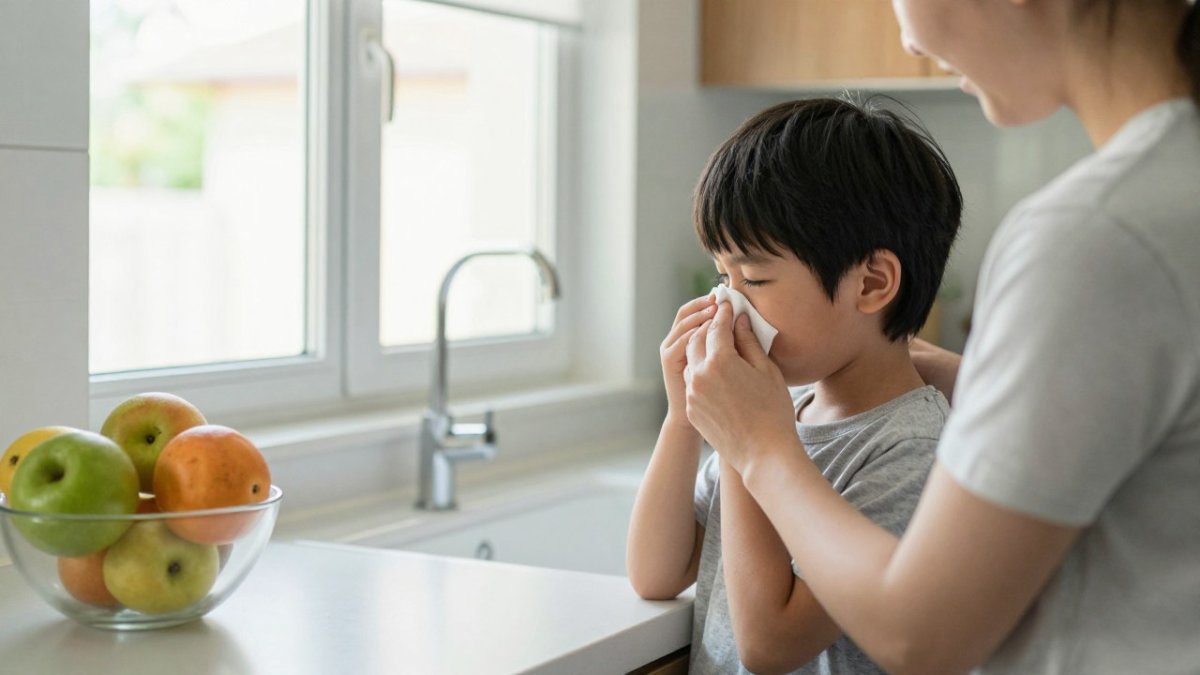
The naturopathic approach layers three things: reduce exposure, support the nasal passages, and support the immune system. Do them in that order, because exposure control does the heaviest lifting.
1. Reduce exposure (works for every age)
- Check the local pollen forecast each morning and plan outdoor play for lower-count windows; counts are typically lowest after rain and in the early evening.
- Keep windows closed on high-count days and run air conditioning on recirculate rather than pulling in outdoor air.
- Have your child change clothes and rinse off after outdoor play, and keep outdoor shoes out of bedrooms.
- Wash bedding weekly in hot water and dry it indoors on high-pollen days rather than on an outdoor line.
- Use a HEPA filter in the bedroom and vacuum with a HEPA-equipped vacuum; most practitioners suggest focusing effort on the bedroom first, since that is where a child spends the most consecutive hours.
2. Support the nasal passages
Saline rinses are a common part of natural seasonal-allergy care, and water safety matters. Use distilled, sterile, or previously boiled and cooled water, never untreated tap water, and follow the product directions. Age matters here:
A humidifier can ease dry, irritated passages, but keep it clean and don’t over-humidify, damp bedrooms encourage dust mites, which are a year-round trigger.
3. Support the immune system
Sleep, outdoor activity, and a diet rich in fruits and vegetables are the boring foundation, and they matter more than any single supplement.
Where natural care meets conventional care
This is the part most parents actually need. Natural measures and conventional seasonal-allergy treatment are not an either/or.
Watch out: Trouble breathing, wheezing, swelling of the lips or face, or symptoms that don’t respond to the usual plan are reasons to call the doctor or seek urgent care rather than add another home remedy.
If your child’s seasonal pattern is unclear, a simple two-week symptom log, date, pollen count, symptoms, and what you tried, gives a provider far more to work with than a memory of “bad springs.”
The article lays out a layered approach to seasonal allergies, with exposure control doing most of the work.
| Step | What to do | Note |
|---|---|---|
| Reduce exposure | Check pollen forecast; keep windows closed on high-count days | Counts typically lowest after rain and early evening |
| Clean bedding | Wash weekly in hot water; dry indoors on high-pollen days | Avoid outdoor lines during high pollen |
| Filter air | Use HEPA filter and HEPA vacuum, starting in the bedroom | Bedroom is where a child spends the most hours |
| Support nasal passages | Saline rinses with distilled, sterile, or boiled-and-cooled water | Never use untreated tap water |
| Support immunity | Prioritise sleep, outdoor activity, fruits and vegetables | Foundation matters more than any single supplement |
Natural Antihistamine for Kids: What Is Safe to Consider
Parents often search for a natural antihistamine for kids because they want something gentler than a daily medication. The honest starting point: “natural” does not automatically mean safe or effective for children, and the evidence base for most natural antihistamines in kids is thin. What follows is a safety-first framework, not a dosing guide, dosing for a child should come from a licensed provider who knows your child’s age, weight, and history. Because reducing exposure can matter as much as choosing what to take, a natural mattress for child allergies may be worth considering as part of a broader, safety-first approach.
What parents commonly ask about
- **
- Butterbur shows up in adult allergy research, but it has a real safety concern: unpurified butterbur contains compounds that can harm the liver, and it is generally not recommended for young children. This is a good example of a remedy that is popular online but should not be given to a child without a provider’s sign-off.
- Stinging nettle and vitamin C are frequently mentioned; evidence in children is limited, and high-dose vitamin C can cause digestive upset.
- Local honey is a folk remedy, not a proven treatment. It is also unsafe for infants under 12 months because of botulism risk.
Age-specific safety parameters to raise with a provider
- Under 2: supplements of any kind should be treated with extreme caution; the priority is exposure control and saline, not pills or tinctures.
- Ages 2-5: any supplement decision should be made with a pediatric provider, and liquid or chewable forms are usually preferred over capsules for choking safety.
- Ages 6-12: children can often swallow capsules, but dose still depends on weight, and interactions with prescribed medicines need checking.
- Teens: closer to adult dosing, but pregnancy, sports, and prescription interactions still matter.
Questions to ask before starting anything
- Is this safe for my child’s exact age and weight?
- Could it interact with medicines my child already takes, including over-the-counter antihistamines?
- What is the right dose, and for how long?
- What signs would mean I should stop and call the doctor?
How this fits with conventional care
Most families don’t have to choose. A provider can help you decide whether a natural option is worth trying alongside a prescribed or over-the-counter antihistamine, or whether it should wait. The goal is a plan that is safe and that your child’s pediatrician knows about, not a secret supplement cabinet.
Watch out: Never guess at dosing for a child, and never stop a prescribed allergy medicine or epinephrine plan to try a natural alternative without talking to your child’s doctor first.
Natural Remedies for Allergies and Sinus Symptoms
Sinus symptoms, such as congestion and pressure, often travel with allergies. Several natural measures are commonly used for comfort. For a practical look at dietary approaches to allergy symptoms, see nutrition counseling in integrative medicine.
What people commonly try:
- Saline nasal rinses, done with safe water
- Humidifiers to ease dry air
- Steam from a warm shower
- Nutrition changes that reduce known food triggers
Nasal irrigation with a neti pot can also help, but it carries risk if done wrong. Only use sterile or boiled and cooled water, and never use tap water. Children need close supervision, and many do better with a squeeze bottle than a neti pot.
Natural care works best alongside your child’s regular treatment. It should not replace it.
Natural Alternative to Flonase for Kids: Options and Limits
Many parents ask about a natural alternative to Flonase for kids. Flonase is a steroid nasal spray, and it works differently from most home remedies.
Saline rinses, air filtration, and allergen avoidance are general measures that differ from a prescription nasal steroid. For some children, a steroid spray is the right tool, and stopping it can leave symptoms uncontrolled.
If you are considering a switch, bring these points to your pediatrician:
- How severe your child’s symptoms are
- Which triggers you have already identified
- What you have tried so far
- Any side effects you have noticed
Pacific Naturopathic can discuss a plan that may work alongside your child’s doctor. Please do not change prescribed medicine on your own.
Scheduling a Consultation for Your Child’s Allergies
A consultation is the best next step if your child’s allergies affect sleep, school, or daily play. Bring a symptom log, a list of medicines, and any recent test results.
Pacific Naturopathic can review your child’s history and talk through options. In-person and telemedicine appointments are available.
Before you book, you may want to compare local naturopathic doctors so you know what to ask. Pacific Naturopathic welcomes new patients. Request an appointment today to start a personalized plan for your child.
Frequently Asked Questions
What is the best natural remedy for allergies for kids?
There is no single best natural remedy for every child. Many parents start with environmental steps such as keeping windows closed during high pollen days, rinsing the nose with a saline solution made for children, and washing hands and bedding regularly. Naturopathic doctors may also discuss nutrition and targeted supplements. Because children respond differently, and some products are unsafe for young ages, talk with your child’s pediatrician or a licensed naturopathic doctor before starting any new remedy.
Are natural antihistamines safe for children?
Some natural antihistamine ingredients are used in children, but safety depends on the ingredient, the child’s age, weight and health history, and the dose. Supplements are not regulated as strictly as medications in the United States, so product quality can vary. Ask a qualified provider before giving any supplement to a child, especially if the child takes other medications or has asthma, eczema or a history of allergic reactions.
How can I help a child with seasonal allergies naturally?
Practical steps include checking local pollen counts, keeping windows closed during peak pollen hours, showering and changing clothes after outdoor play, using a HEPA air filter in the bedroom, and rinsing the nasal passages with saline. Diet and sleep also matter because they influence overall immune function. These steps can reduce exposure, but they do not replace a medical evaluation when symptoms are severe or persistent.
What should I do if my child has a severe allergic reaction?
Signs of a severe reaction include trouble breathing, wheezing, swelling of the lips, tongue or throat, repeated vomiting, or fainting. Call 911 right away. If your child has a prescribed epinephrine auto-injector, use it as directed and then seek emergency care, even if symptoms improve. Natural approaches are not a substitute for emergency treatment in these situations.
