
How to Find High-Dose IV Vitamin C for Cancer Support Near You
Last Updated: October 26, 2026
Quick Summary
High-dose IV vitamin C cancer therapy delivers ascorbic acid directly into the bloodstream at concentrations far exceeding oral supplements, and many cancer patients explore it as a complementary therapy alongside conventional treatment. A 2024 University of Iowa study reported increased survival when high-dose IV vitamin C was added to chemotherapy and radiation for advanced pancreatic cancer, though this represents one area of ongoing investigation rather than an established protocol.
- High-dose IV vitamin C is not a cancer cure or replacement for conventional oncology care.
- G6PD testing is part of standard intake protocol before high-dose IV vitamin C cancer treatment.
- Discuss timing and compatibility with your oncologist before scheduling IV vitamin C infusions with your specific chemotherapy regimen.
- Ask providers about credentials, baseline lab requirements including kidney function, monitoring during infusions, and realistic outcomes for your situation.
- Total cost structure, insurance billing options, and cancellation policies should be provided in writing before treatment begins.
Table of Contents
- Understanding High-Dose IV Vitamin C for Cancer Support
- IV Vitamin C Cancer Treatment Evidence: What the Research Shows
- How Intravenous Infusions Are Administered
- G6PD Testing Before High-Dose Vitamin C: Why It Matters
- IV Vitamin C and Chemotherapy Interactions: Coordination With Your Oncologist
- Questions to Ask an IV Vitamin C Provider Before Treatment
- Scheduling Your Integrative Oncology Consultation
- Frequently Asked Questions
Understanding High-Dose IV Vitamin C for Cancer Support
High-dose IV vitamin C cancer therapy delivers ascorbic acid directly into the bloodstream at concentrations far exceeding oral supplements. Many cancer patients explore complementary therapies alongside conventional treatment.
The research landscape around intravenous vitamin C infusions continues to evolve. According to University of Iowa’s 2024 study on high-dose IV vitamin C with chemotherapy for pancreatic cancer, researchers reported a significant increase in survival when high-dose IV vitamin C was added to standard chemotherapy and radiation for advanced pancreatic cancer. However, this represents one area of ongoing investigation rather than a universally established treatment protocol.
High-dose IV vitamin C is not a cancer cure or a replacement for conventional oncology care.
IV Vitamin C Cancer Treatment Evidence: What the Research Shows
Study quality matters when reading research about IV vitamin C in cancer care.
Look at the sample size and the population. A National Cancer Institute PDQ summary describing a small study of 14 people with advanced pancreatic cancer receiving high-dose IV vitamin C alongside chemotherapy and erlotinib is a useful window into how this therapy is studied, but 14 people is a small sample. Results from a small group of patients with one cancer type at one stage do not automatically generalize to other cancers, other stages, or other treatment regimens. A 2021 review of high-dose IV vitamin C in advanced-stage cancer patients documents three cases of patients with advanced cancer who received high-dose IV vitamin C infusions and experienced unexpectedly long survival times. Those cases are worth noting, but three observations cannot tell us whether vitamin C caused the outcomes or whether something else did.
Pacific Naturopathic offers high-dose IV vitamin C as part of its advanced therapies.
How Intravenous Infusions Are Administered
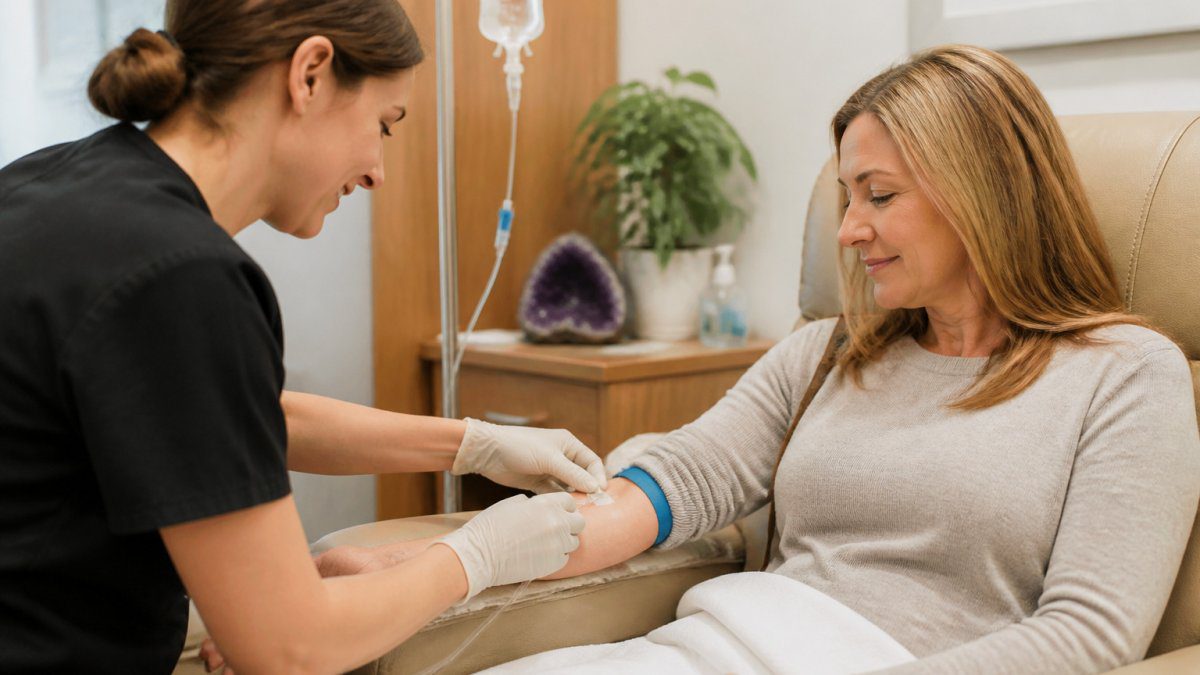
An intravenous infusion delivers ascorbic acid directly into your bloodstream, bypassing the digestive system. Your gut can only absorb a limited amount of oral vitamin C; high-dose infusions achieve blood concentrations that oral supplements cannot reach.
G6PD Testing Before High-Dose Vitamin C: Why It Matters
At Pacific Naturopathic, G6PD testing is part of our standard intake protocol for any patient considering high-dose IV vitamin C cancer treatment. We also screen for other contraindications and assess overall health before treatment begins.
IV Vitamin C and Chemotherapy Interactions: Coordination With Your Oncologist
Discuss complementary therapies with your oncology team.
Before scheduling any IV vitamin C infusion, talk with your oncologist about timing and compatibility with your specific regimen. Some are open to it during certain phases or between cycles; others prefer to avoid it or suggest spacing infusions several days from chemotherapy.
Pacific Naturopathic provides adjunctive cancer care.
5 Key Elements of Integrative Cancer Recovery Care(page:2) provides a framework for how IV vitamin C fits into a broader integrative approach that complements your primary cancer care.
Questions to Ask an IV Vitamin C Provider Before Treatment
About the provider’s credentials and oversight
- Are you a licensed naturopathic doctor, MD, DO, nurse practitioner, or other regulated healthcare provider in this state, and what is your license number?
- Who writes the order for the infusion, and is there a supervising or collaborating physician if the person administering it is not a prescriber?
- How long have you been offering high-dose IV vitamin C therapy, and do you have specific training in integrative oncology or IV therapy administration?
- Can you describe your experience working with cancer patients, including the cancer types and treatment stages you commonly see?
- Is the clinic accredited or licensed by any relevant state or professional body, and can you share that documentation?
About your specific treatment plan and lab requirements
- Have you reviewed my medical history, current cancer treatment, and recent lab work before recommending a dose?
- What dose of vitamin C are you recommending, and why that dose for my situation?
- What baseline labs do you require before the first infusion, and do you check kidney function, G6PD status, and electrolyte levels?
- How frequently do you recommend infusions, and for how long?
- Will you coordinate with my oncologist, and how will that communication happen (shared records, letter, phone call)?
About safety, monitoring, and emergencies
- How will you monitor me during and after infusions, including vital signs and any symptoms?
- What side effects or complications should I watch for, and what is your protocol if I experience an adverse reaction?
- Does the clinic have emergency equipment and trained staff on site during infusions, and what is the plan if a severe reaction occurs?
- What is your policy on infusing patients who are pregnant, have kidney disease, or have a history of oxalate stones?
About expectations and outcomes
- What realistic outcomes should I expect from this therapy, and what does the evidence actually support for my situation?
- Is this intended to replace my conventional cancer treatment or complement it?
- How will we measure whether this therapy is helping, and what would make you recommend stopping?
- What happens if I don’t see the results I hoped for?
About logistics, cost, and transparency
- What is the total cost structure for the treatment plan you’re recommending, including the consultation, labs, infusion, and any supplies or facility fees?
- Is pricing published or provided in writing before treatment begins, and are there package discounts or prepayment requirements?
- Does this clinic bill insurance, or is it out-of-pocket, and will you provide a superbill or itemized receipt I can submit?
- What is your cancellation, refund, and pause policy if I need to stop treatment?
Before committing to high-dose IV vitamin C therapy, ask your provider about credentials, treatment planning, safety protocols, realistic outcomes, and costs.
| Question Category | Key Topics to Clarify |
|---|---|
| Provider credentials and oversight | License type, supervising physician, training in integrative oncology, experience with cancer patients |
| Treatment plan and lab requirements | Recommended dose rationale, baseline labs including G6PD and kidney function, infusion frequency and duration |
| Safety, monitoring, and emergencies | Vital sign monitoring during infusions, side effects to watch for, emergency equipment and protocols |
| Expectations and outcomes | Realistic results for your situation, whether complementary or replacement therapy, how success is measured |
| Logistics, cost, and transparency | Total cost structure, insurance billing or out-of-pocket, cancellation and refund policies |
Scheduling Your Integrative Oncology Consultation
Pacific Naturopathic welcomes new patients for integrative cancer consultations.
Mountain View Natural Medicine: Clinic Comparison Guide(page:3) can help you evaluate local integrative oncology providers and understand what to look for in a clinic environment and care model.
At Pacific Naturopathic, we welcome new patient consultations for integrative cancer support. Our approach combines individualized evaluations and evidence-informed natural therapies.
In-person and telemedicine appointments are available. To request a consultation, contact us at (650) 961-1660 or visit our website to learn more about our integrative oncology services.
Pacific Naturopathic offers adjunctive cancer care and high-dose IV vitamin C. Request an appointment to learn more.
Frequently Asked Questions
Can high-dose IV vitamin C be used alongside chemotherapy or radiation?
Pacific Naturopathic offers high-dose IV vitamin C as an advanced therapy and provides adjunctive cancer care. Discuss complementary therapies with your oncology team.
What tests may be needed before IV vitamin C therapy?
Ask a qualified healthcare professional what evaluation may be appropriate before considering IV therapy.
What should I ask an IV vitamin C provider before treatment starts?
Ask about the provider’s qualifications, the services offered, and any questions you have about care. Discuss complementary therapies with your oncology team.
Is high-dose IV vitamin C an effective cancer treatment on its own?
High-dose IV vitamin C is not a replacement for conventional oncology care. Pacific Naturopathic offers it as an advanced therapy and provides adjunctive cancer care. Discuss complementary therapies with your oncology team.
